 |
|||||||
 |
|||||||
 |
 |
 |
 |
 |
 |
 |
 |
 |
|||||||

Help save history in your community by restoring and reusing historic buildings.
South Side Recreation Center
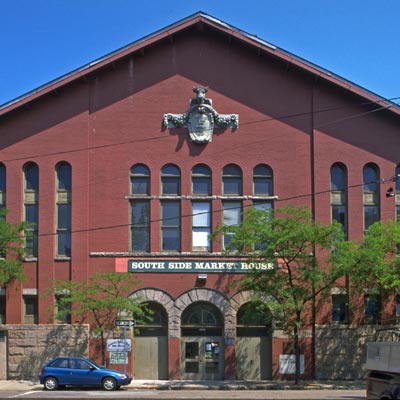
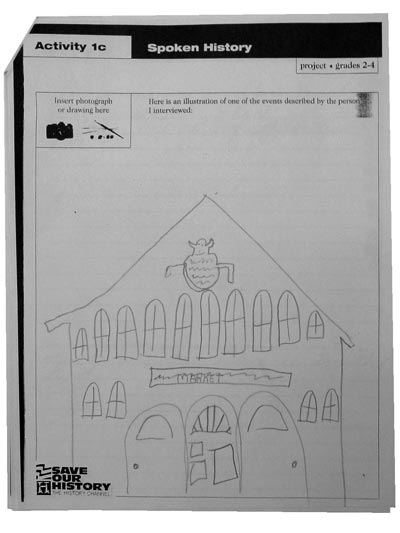
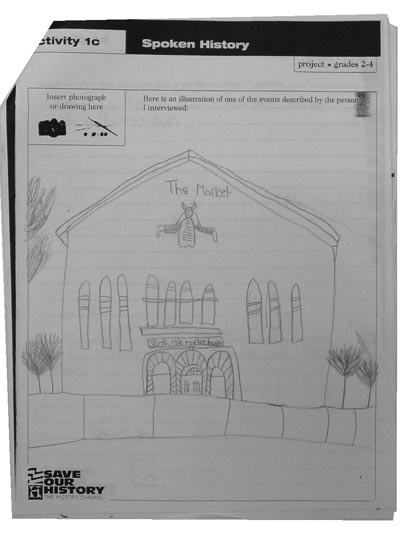
“They used to sell live chickens at the Market House. When a customer wanted to buy one of the chickens, the farmer would break the chicken's neck to kill it. Then the customer would take the chicken home. This story was amazing to me because we buy chicken in a packet now.” —student quote
- Formerly, The Market House
12th and East Carson Streets
Pittsburgh, PA 15203 - Date and Style
- Built in 1893; rebuilt in 1915
- —Richardsonian Romanesque style
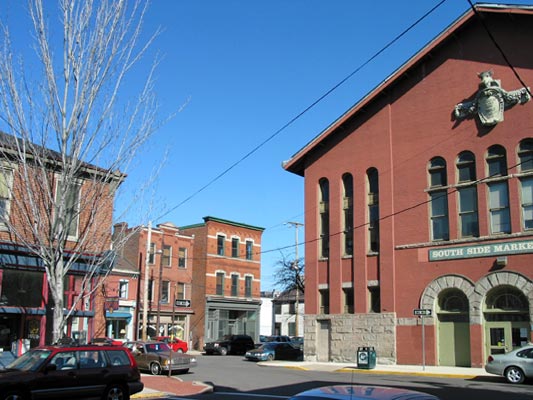
- The rounded entrances and windows, and foundation stonework, are typical of the Richardsonian Romanesque style. The style was named after the famous American architect who created it: Henry Hobson Richardson (1838-1886).
- Facts and Stories Worth Knowing
- This is the fifth market house to have been built on this site in Bedford Square.
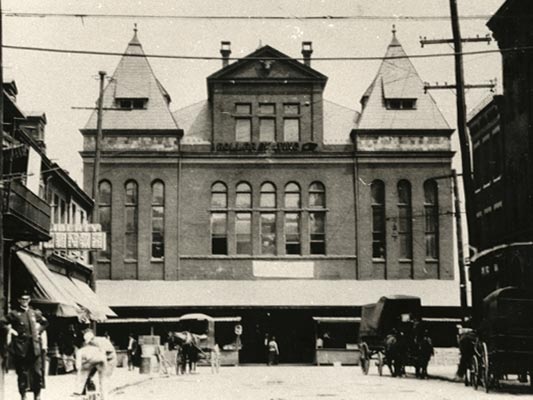
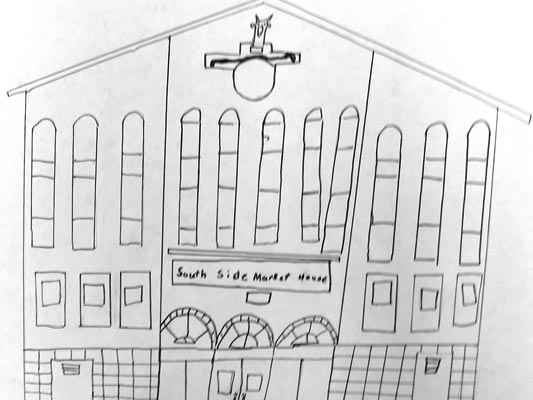
- Charles Bickel designed this market house in 1893-95 (see photo below).
- The Market House was destroyed by a fire (probably in 1914) and rebuilt in 1915. Bickel's Romanesque walls survived, but his four peaked towers were destroyed and a new gable roof was added.
- According to an undated "Did You Know...History Corner" article in Stanley Zaidel's collection of South Side clippings: "Every detail of the building was state-of-the-art for its day and the Market House was the envy of the country... The cornerstone was laid September 12, 1893 by [Market House] Superintendent [D. L.] McDonald with appropriate ceremonies. A sketch of the building, photographs, old coins, copies of all the daily papers and other important matters were put in a box sealed and placed in the conerstone. The box was encased about four feet from the ground at the southwest corner of the building."
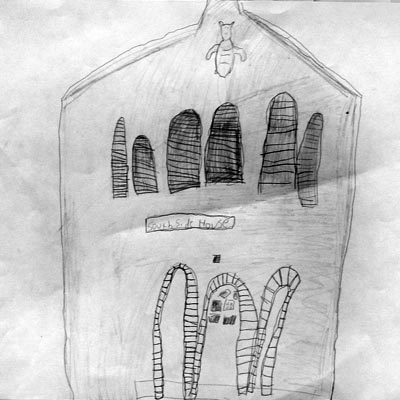
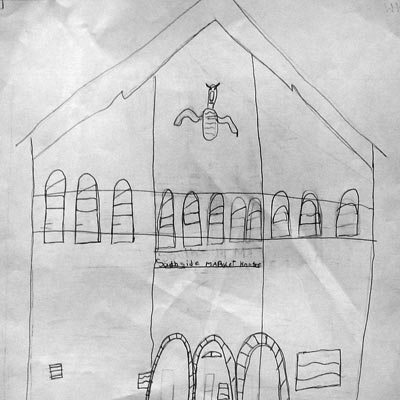
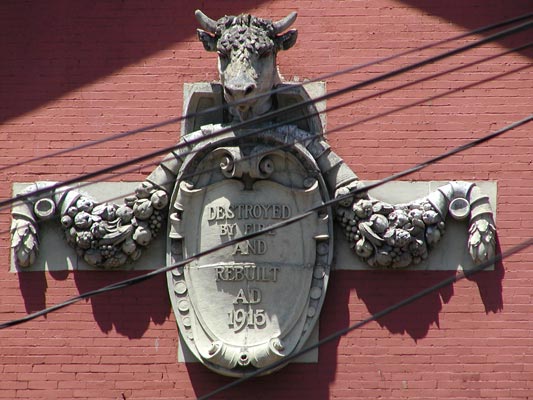
- The bull's head on the building façade is the symbol for a market house. The plaque was added after the fire and reads: “Destroyed by fire and rebuilt AD 1915.”
- In the early 1900s a roller skating rink was located on the second floor of the market house.
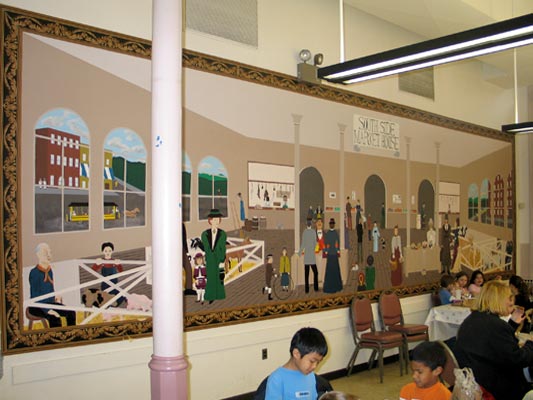
- The market house served as the food store and meeting place for the Polish, Ukrainians, Italians, Germans, Serbians, Croatians, Slovaks, Lithuanians, Russians, Irish and others who immigrated to the South Side.
- Lee Dittley, a South Side artist and life-long resident, recalled “accompanying his mother on her twice-weekly shopping trips there. Farmers, who came from as far away as Whitehall, would set up their stalls outside the markethouse. There they would sell butter from tubs, or in prints [butter molds] wrapped in cheesecloth at three pounds for twenty-five cents. They also sold cheese cut from a wheel, fresh fruits, vegetables, eggs and poultry. Inside the markethouse, counters were backed by racks of slaughtered cattle and pigs hanging from meathooks. All purchases were wrapped with heavy paper, tied neatly with string and put into the shopping basket which every woman carried.” (From These Slopes and Flats: Lee Dittley's Old South Side; 1979)
- During the Depression years, youth dances were held on the second floor to help keep kids off the street.
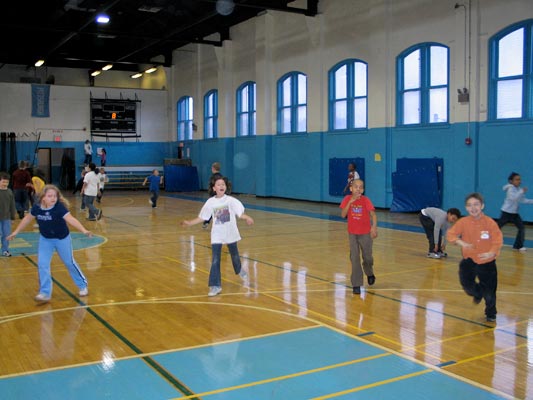
- In 1943, the market house became a recreation and community center. This was a very early example of adaptive reuse of a historic structure.
- The “Golden Gloves” boxing tournaments were held in the old market house, and semi-professional basketball was played there.
- Goldenson's department store on East Carson Street sponsored the Goldenson Girl's basketball team.
- On May 19, 1978, the dedication and opening of the “New” South Side Market House was celebrated. The building had been remodeled to house senior citizen programs, pre-school programs, athletic events, and community get-togethers.
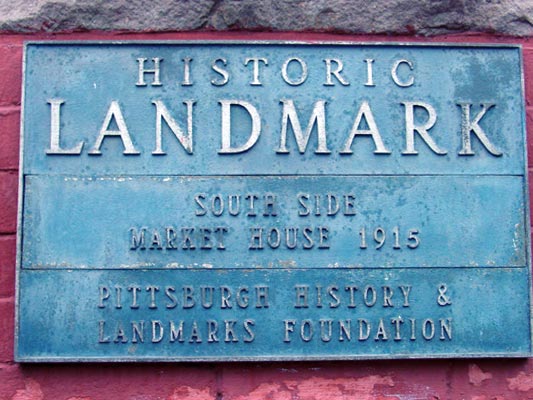
- Listed on the National Register of Historic Places, located within a City Historic District, and awarded a Historic Landmark plaque, this building is one of the last two remaining 19th-century market houses in Pittsburgh. (The other is in East Liberty and has also been adapted for a new use.)
- A special event took place in the Market House on April 30, 2005. Go to Carson Street Community Celebration.
- The recreation center was closed in 2011 since interior renovations needed to be made, particularly to the basement. Programs were relocated to the Brashear Association on Sarah Street. The South Side Recreation Center will reopen once the interior renovations are complete.
<< Esser's Floral Shop | Back to Buildings | 1206 East Carson St. >>
Additional Images
|
|
|
|
|
|
|
|
|
|
|
|
|

|
|

|