Easements
Preservation Easements Donated to PHLF: Protecting Historic Properties in Perpetuity
The Pittsburgh History & Landmarks Foundation (PHLF) is one of the only “qualified organizations,” as defined by Section 170 of the Internal Revenue Code, in southwestern Pennsylvania to accept donations of preservation easements to ensure that a historic property is protected in perpetuity. PHLF has accepted 61 easements since 1979.
What is a Preservation Easement?
A preservation easement is a legal agreement between a property owner and the Pittsburgh History & Landmarks Foundation (PHLF) that places permanent, mutually agreed restrictions on a historic property to protect it from inappropriate alteration, development, and destruction. Preservation easements protect the conservation values defined in the legal agreement and baseline documentation and may extend to a building’s façade, a building’s entire exterior, air space above a building, interior spaces, and/or open space and landscaping. Generally, the legal agreement states that no change will be made to the historic property that is contrary to the U.S. Secretary of the Interior’s Standards for Rehabilitation, without the prior written consent of PHLF.
The legal agreement is recorded in the local Recorder of Deeds’ office and binds both the current owners and all future owners. PHLF inspects its preservation easements on at least an annual basis by visiting each of the properties. It also has a responsibility to defend and enforce the preservation easement as may be necessary. Contributions are solicited to endow these perpetual costs and expenses.
Who Can Donate an Easement?
Any historic property owner may donate a preservation easement to PHLF. In the past, donors have included individuals, limited partnerships, for-profit corporations, and even non-profit organizations. PHLF has also received preservation easements as a condition to loan transactions, from the sale or acquisition of properties, and, in 2002, received a major grant from the Richard King Mellon Foundation to purchase preservation easements on historic farms.
PHLF’s Procedure for Accepting Easements
The first step to donating a preservation easement is to complete and return PHLF’s Preservation Easement Application Form. PHLF then reviews the application, meets with the applicant, and visits the site if necessary. The terms of the legal agreement are then negotiated, and PHLF drafts the preservation easement. The applicant reviews the legal agreement with his/her own attorney and/or tax advisors. PHLF staff present the preservation easement to the PHLF Easement Committee and/or Board of Trustees to review.
If approved, prior to closing the applicant obtains a survey, an appraisal, title insurance for PHLF, and other documentation as may be requested from PHLF in accordance with its Preservation Easement Policy, and PHLF puts together baseline documentation on the current condition of the property. When all prerequisites are obtained, PHLF and the applicant sign the legal agreement, which is subsequently recorded in the local recorder’s office. PHLF then monitors the preservation easement at least annually in perpetuity.
Benefits
The primary benefit of donating a preservation easement on a historic property is that the historic character of a property is permanently protected. Another benefit is that a federal charitable contribution deduction may also be available for the donation of a qualified preservation easement to a qualified organization, such as PHLF if the donation complies with all of the requirements of Section 170(h) of the Internal Revenue Code and its regulations. These requirements include that (1) the property be listed on the National Register or be a contributing structure to a National Register-listed or certified local historic district; (2) public access be provided (visual access is sometimes sufficient), and (3) the easement be in perpetuity, among other things.
The amount of the charitable contribution deduction is equal to the value of the preservation easement as determined by a “qualified appraisal” completed by a “qualified appraiser.” PHLF recommends that all potential applicants seek advice from their own attorneys and/or tax advisors since PHLF does not provide tax or legal advice. This information is being provided as general guidance only.
Deed Restrictions Offer Protection
PHLF also holds deed restrictions on approximately 35 historic properties, including on the five former P&LERR buildings at Station Square; on houses in the Mexican War Streets, South Side, Manchester, and Natrona; and on a commercial building in Sewickley. Deed restrictions differ from preservation easements in that they last for a specific term of years (typically 99 years) rather than in perpetuity. Many of the deed restrictions also give PHLF a right of first refusal to purchase the property, prior to its sale.
For more information, contact the Easement Office at 412-471-5808.
The following information identifies the current building name (and original building name); dates of design/construction; the architect, if known; the donor of the preservation easement and date; and historic designations awarded. The donors listed are those included in the easement documents recorded in the local recorder of deeds offices.
City of Pittsburgh
Beechview
-
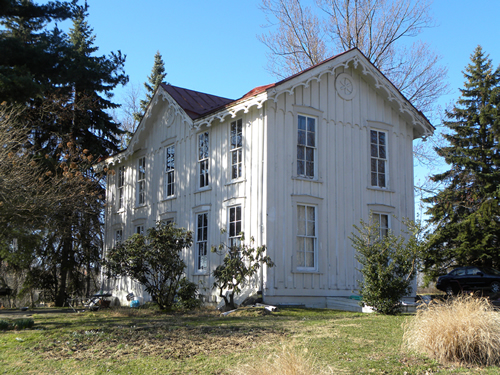
Lowen House
311 Lowenhill Street, Beechview
C. 1860
Donor: Thomas G. and Christine M. Simmons; 1999
City-Designated Historic Structure
Downtown Pittsburgh
-
900 Penn Avenue (Wm. G. Johnston & Company)
900 Penn Avenue, Downtown Pittsburgh
Deeds & Brothers, builder, 1885; remodeling, 1915
Donor: 900 Penn Avenue, L.P.; 2014
Penn-Liberty National Register Historic District; City-Designated Penn-Liberty Historic District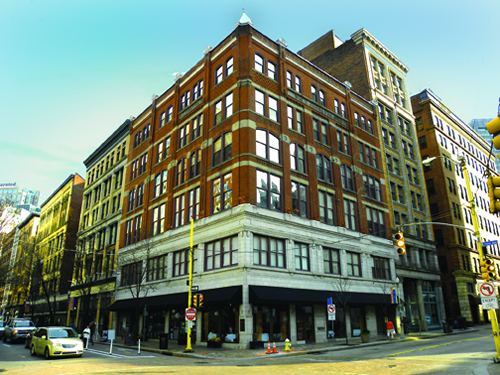
-
413–415 and 417 Wood Street, Downtown Pittsburgh
1883, refaced c. 1905; 1875
Donor: J. R. Weldin Co.; 2011
National Register of Historic Places District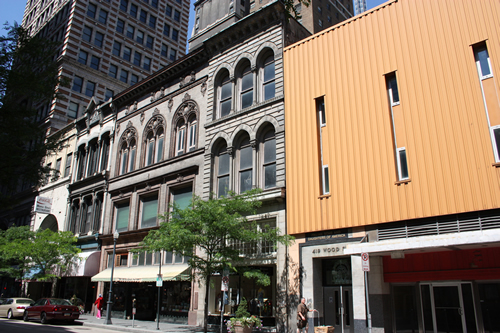
-
Burke's Building
209–211 Fourth Avenue, Downtown Pittsburgh
John Chislett; 1836
Donor: Western Pennsylvania Conservancy; 2010
National Register of Historic Places; Historic Landmark Plaque; City-Designated Historic District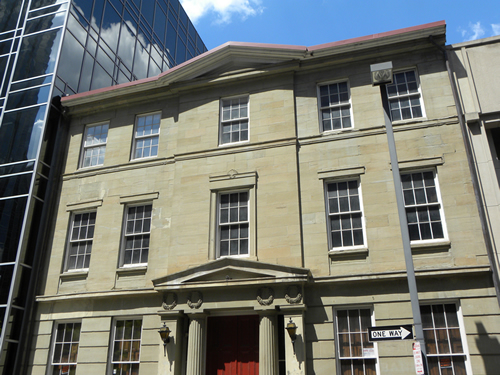
-
The Carlyle (Union National Bank Building)
300–306 Fourth Avenue, Downtown Pittsburgh
MacClure & Spahr; 1906
Donor: Spruce Street Properties, Ltd.; 2009
National Register of Historic Places District; Historic Landmark District Plaque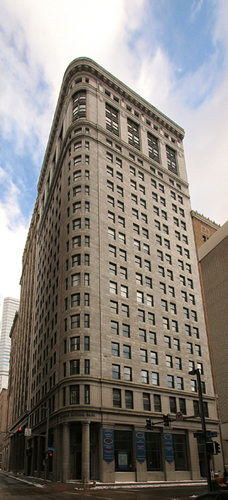
-
Hartley-Rose Building (Hartley-Rose Belting Company Building)
425–427 First Avenue, Downtown Pittsburgh
Edward Stotz; 1907
Donor: First Avenue Partners; 1983
National Register of Historic Places; Historic Landmark Plaque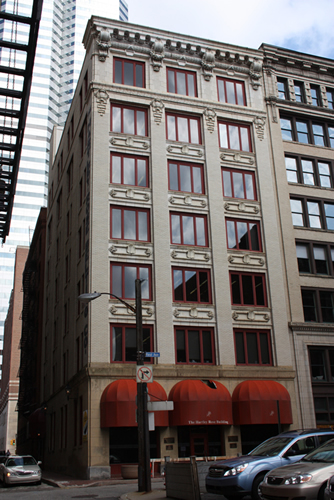
-
The Waterfront Building (center)
200 First Avenue & 217 Fort Pitt Boulevard, Downtown Pittsburgh (photograph of Fort Pitt Boulevard façades)
C. 1870
Donor: Colonial Partners; 1986
National Register of Historic Places District; Historic Landmark District Plaque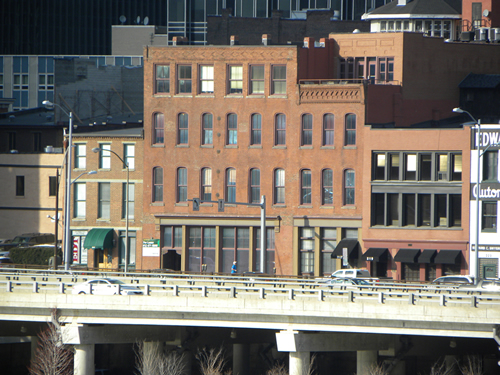
-
417 Wood Street
417 Wood St.
c. 1875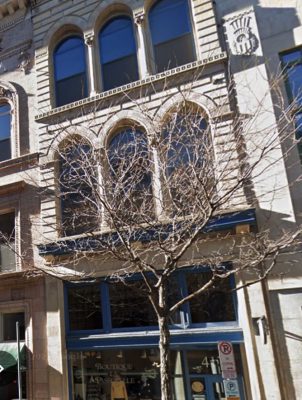
Fineview
-
Heathside Cottage
418 Catoma Street, Fineview
1855
Donor: Judith K. Harvey; 2000
National Register of Historic Places; Historic Landmark Plaque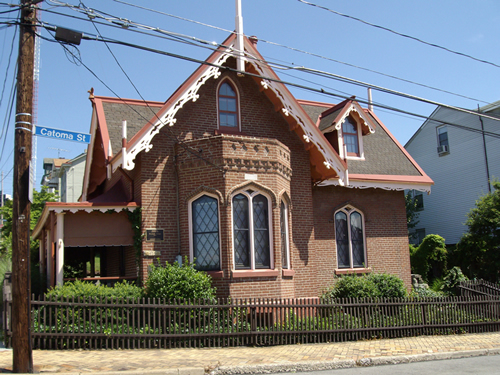
Hill District
-
Energy Innovation Center (Connelley Trade School)
1501 Bedford Avenue, Hill District
Edward B. Lee, architect; 1928-30
Donor: Energy Innovation Center, L.P.; 2012
National Register of Historic Places; Historic Landmark Plaque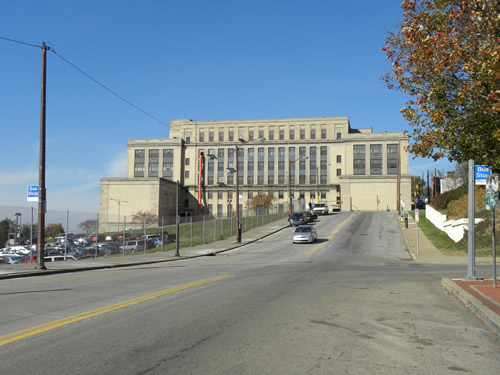
Lawrenceville
-
Stable Building and Bath House
3441 & 3445 Butler Street, Lawrenceville (30-year term)
1888 (Stable); 1904 (Bath House)
Donor: Lawrenceville Development Corporation; 1998
National Register Eligible Historic District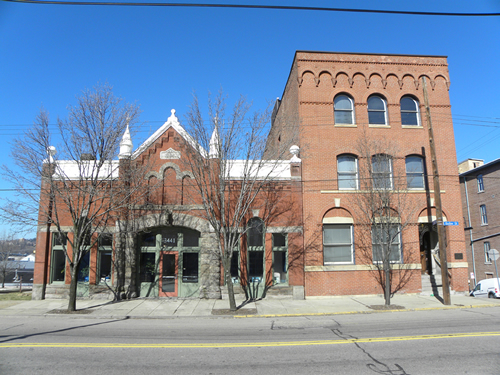
North Shore
-
Heinz Lofts (five H. J. Heinz Company buildings)
500 Heinz Street; 1020, 1026, & 1001 Progress Street; and 1026 River Avenue, Troy Hill
H. J. Heinz Company, R. M. Trimble, and Albert Kahn; 1913–27
Donor: Progress Street Partners, Ltd.; 2003
National Register of Historic Places; Historic Landmark Plaque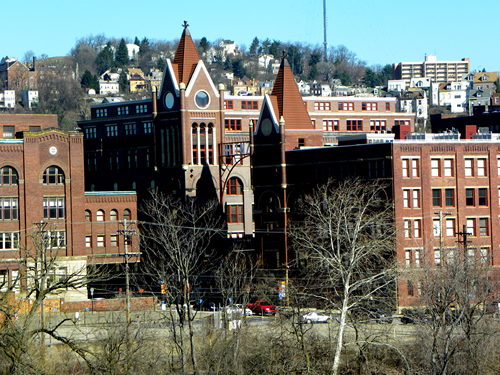
-
1403-1405 Pennsylvania Avenue
1403-1405 Pennsylvania Avenue
City Historic District
Donor: Landmarks Development Corporation, 2019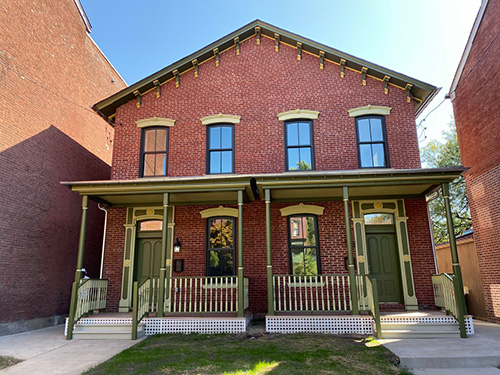
-
1515 Bidwell Street
1515 Bidwell Street
City Historic District
Donor: The Landmarks Development Corporation, 2021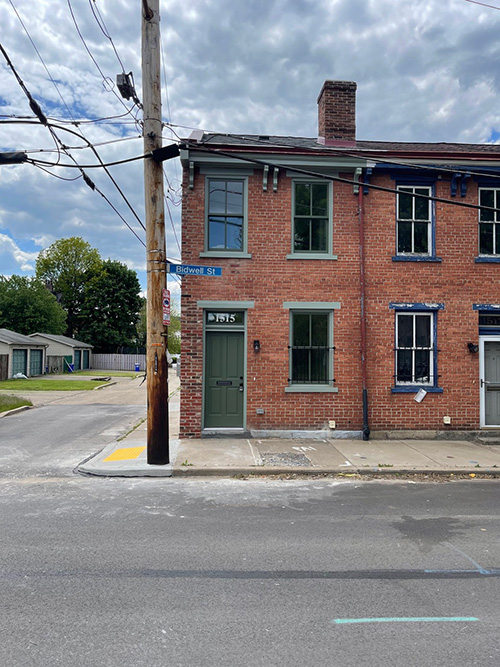
-
St. Peter's Residences
500 Lockhart Street
Built: 1887
City Historic District and Contributing Structure to National Register District
Donor: St. Peter's Residences, LLC, 2021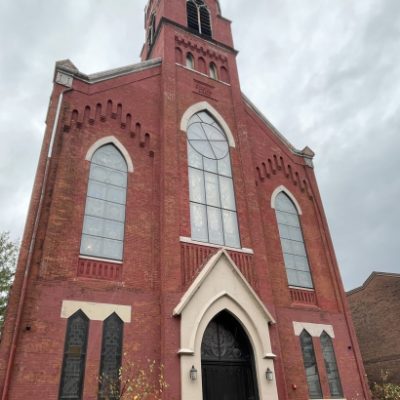
Shadyside
-
Mansions on Fifth Hotel (McCook House and McCook-Reed House)
5105 Fifth Avenue, Shadyside
Carpenter & Crocker; 1906, c. 1905
Donor: Fifth & Amberson Holdings, LP; 2010
National Register of Historic Places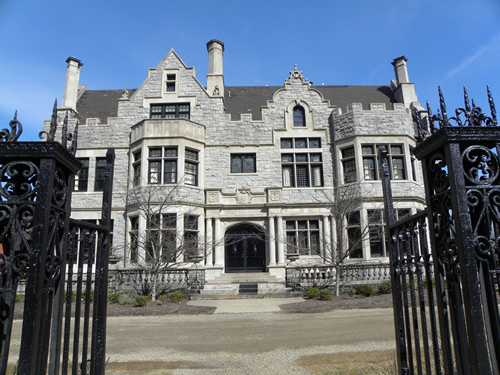
-
Montgomery House
424 Shady Avenue, Shadyside
1877
Donor: Arthur and Melinda Lubetz; 1979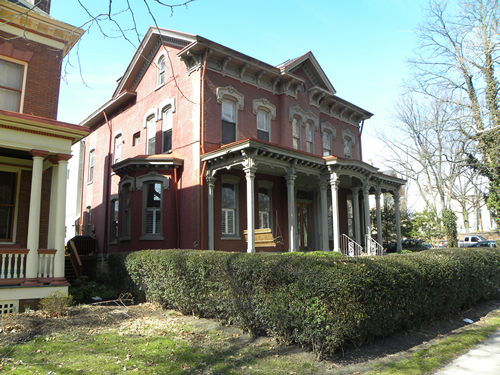
-
Moreland-Hoffstot House
5057 Fifth Avenue, Shadyside
Paul Irwin; 1914
Donor: Henry P. Hoffstot, Jr.; 2011
National Register of Historic Places; City-Designated Historic Structure; Historic Landmark Plaque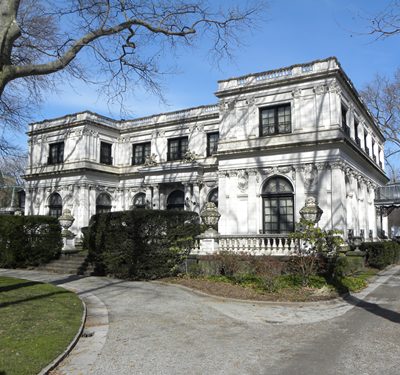
-
McCook-Reed House
925 Amberson Ave., Shadyside
Carpenter & Crocker, 1907
Donor: Fifth & Amberson Holdings, LP; 2010
National Register-listed.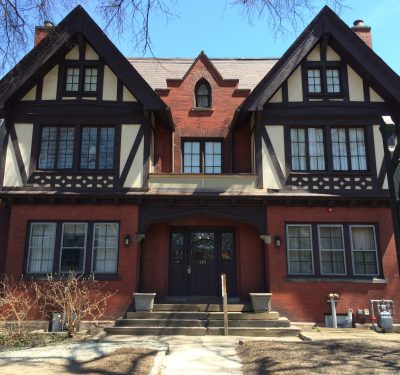
Southside
-
Maul Building
1700 East Carson Street, South Side
1910
Donor: 1700 East Carson Street Associates; 1985
National Register of Historic Places District; City-Designated Historic District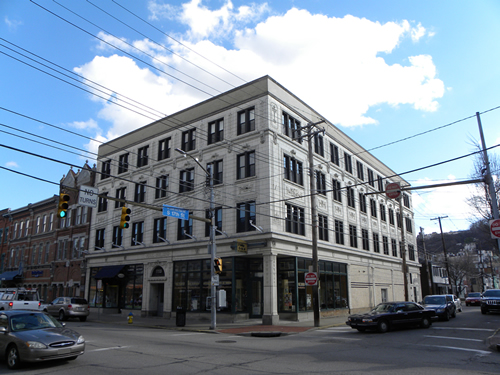
Strip District
-
Cork Factory Lofts (Armstrong Cork Factory)
Railroad Street between 23rd and 24th Streets, Strip District
Frederick J. Osterling; 1901, 1902; addition 1913
Donor: Big River Development, L.P.; 2005
National Register of Historic Places; Historic Landmark Plaque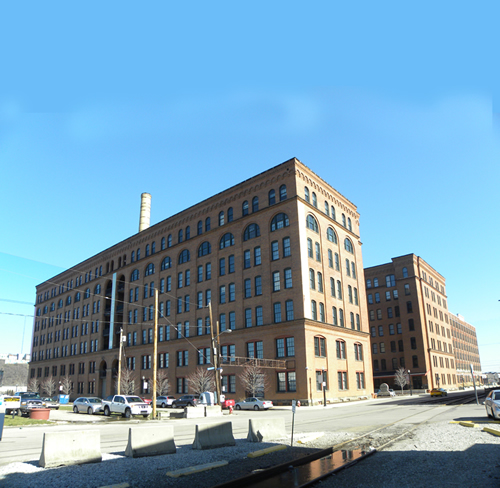
-
Buhl Building
205 Fifth Avenue, Pittsburgh, Downtown.
Jannsen & Abbott, 1913.
Donor: N&P Properties: 2019.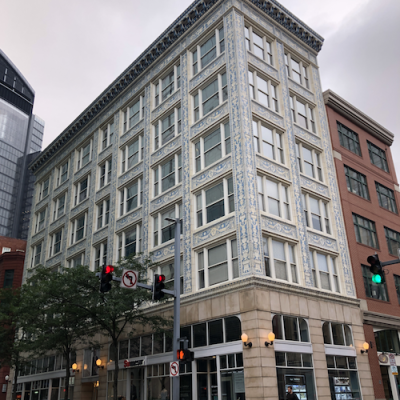
-
Pittsburgh Athletic Association Building
4215 Fifth Ave, Pittsburgh, Oakland.
Benno Janssen, 1911.
Donor: Pittsburgh Athletic Association Land Company: 2017.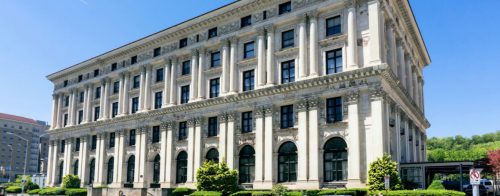
-
Davidson Farmhouse
9701 Saltsburg Road, Plum.
Farmhouse built in 1802, wings added 1820, and 1964.
Donor: Theodora & Ladislau Tompa: 2017.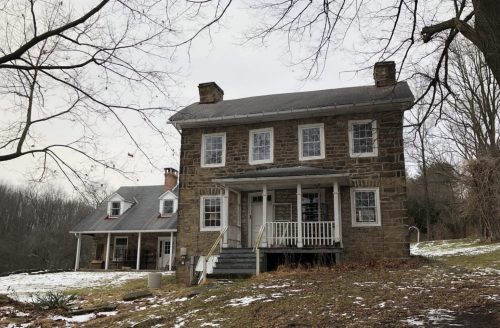
-
239 Fort Pitt Boulevard
Built in 1887
Donor: Keith B. Key Enterprises, LLC; 2022
Firstside National Historic District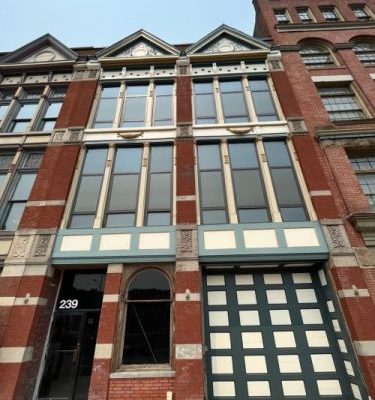
-
235 Fort Pitt Boulevard
c.1885
Donor: That's It Fort Pitt!, LLC; 2022
Firstside National Historic District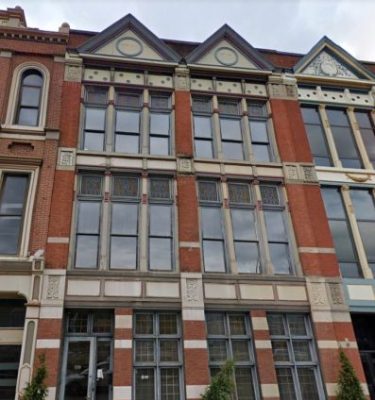
-
Church of Good Shepherd
c.1891
Architect: William Halsey Wood
Donor: POORLAW & Praise Temple Deliverance Church; 2022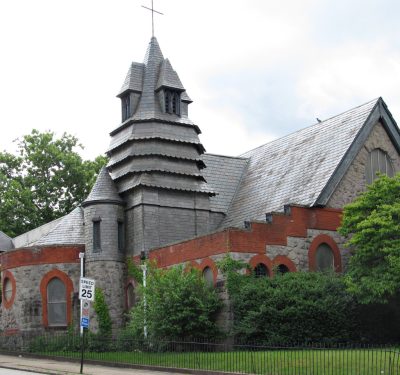
Allegheny County
Bridgeville
-
Neville House (Woodville Plantation)
1375 Washington Pike, Bridgeville
C. 1785; additions and alterations
Neville House Associates, Inc.; 2007
National Historic Landmark; Historic Landmark Plaque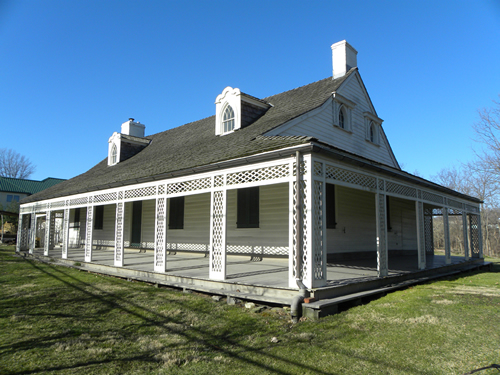
Elizabeth
-
Van Kirk House and Farm
337 Round Hill Road, Elizabeth
C. 1840
Donor: James A. and Dorothy A. Wycoff; 2003
National Register of Historic Places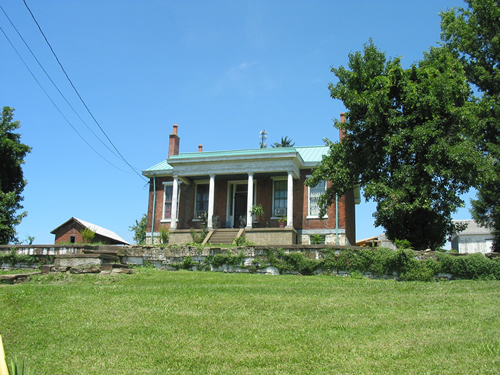
-
Jonathan Wycoff Farm
201 Park Avenue, Elizabeth
Early nineteenth-century farmhouse with some details from c. 1758; additions c. 1823 and 1825
Donor: Sara L. Wyckoff, as Executrix of Helen R. Wycoff; 2003
National Register Eligible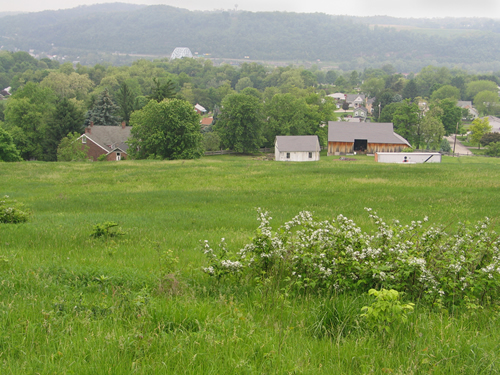
Gibsonia
-
Ross-Tooke House and Farm
2073 Old State Road, Gibsonia
C. 1835
Donor: William Versaw; 2001
Historic Landmark Plaque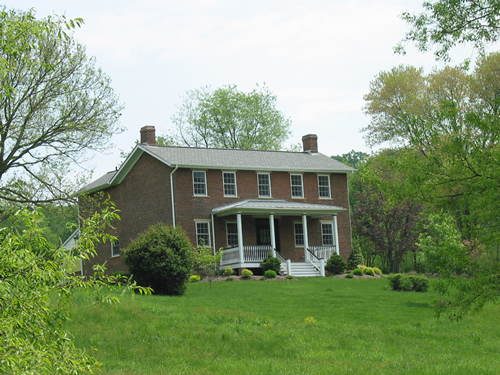
Sewickley Heights
-
Wilpen Hall
889-895 Blackburn Road, Sewickley Heights
George S. Orth, architect; 1899-1900; addition in 1925
Donor: William Penn Snyder III; 2014
National Register of Historic Places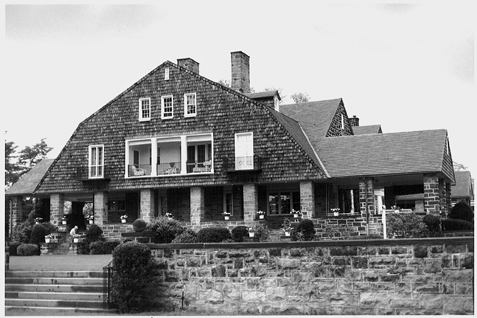
Wilkinsburg
-
811 Holland Avenue, Wilkinsburg
C. 1890s
Donor: Erin M. Cunningham; 2007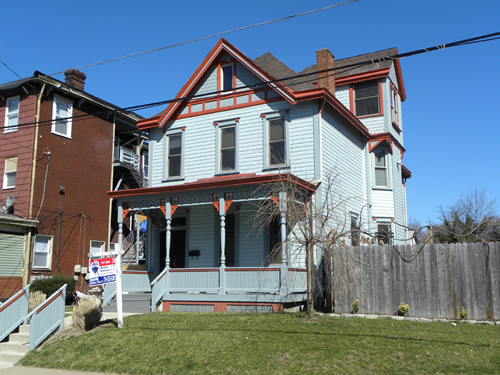
-
516 Jeanette Street, Wilkinsburg
C. 1890s
Donor: John Cindric; 2008
National Register of Historic Places District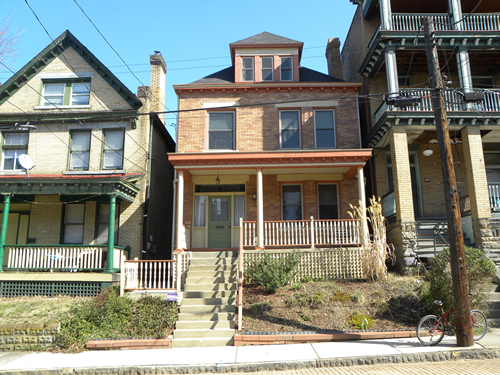
-
522 Jeanette Street, Wilkinsburg
C. 1890s
Donor: Dorothy Sielatycki; 2008
National Register of Historic Places District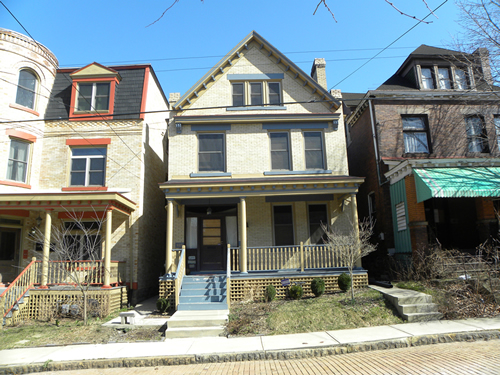
-
524 Jeanette Street, Wilkinsburg
C. 1890s
Donor: Walter and Rachel Lamory; 2008
National Register of Historic Places District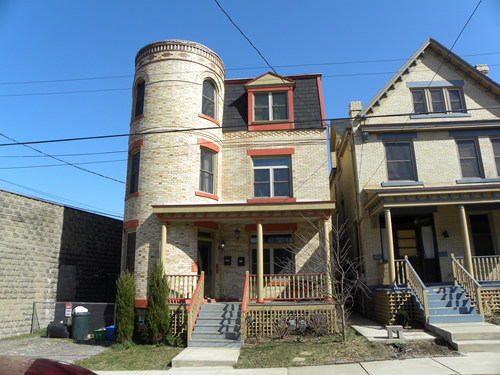
-
Chalfant Log House & Pond
Built in 1832
Donor: The Estate of Charles Dana Chalfant; 2020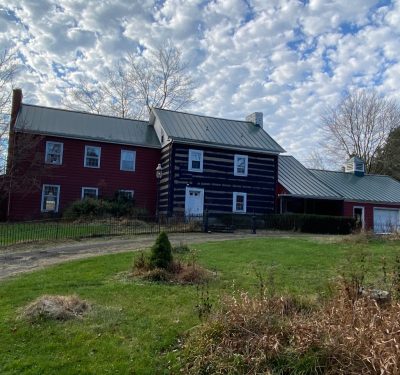
-
The Sperling Building
c.1902
Donor: RT Wilkinsburg LLC; 2022
National Register of Historic Places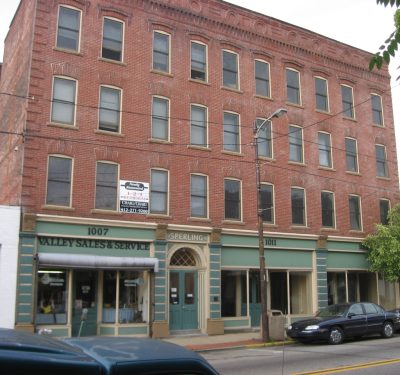
-
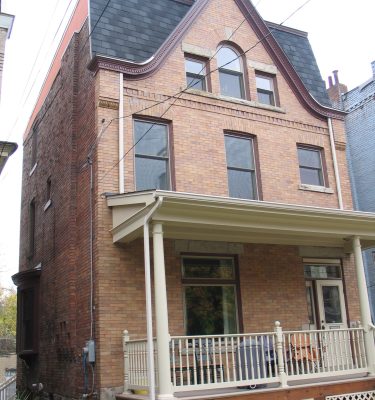
517 Jeanette St
1920; Contributing to NR district
-
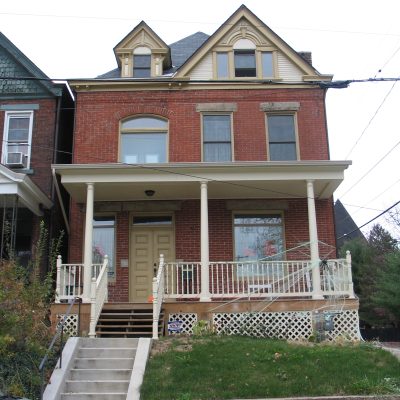
845 Holland Ave
845 Holland Ave
-
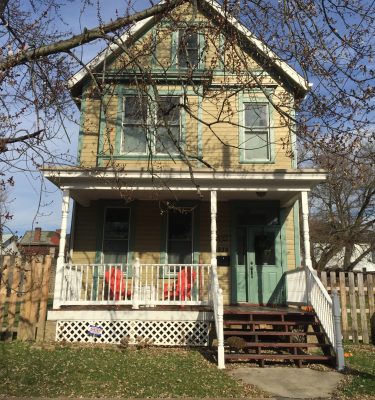
833 Holland Ave
833 Holland Ave
Beyond Allegheny County
Bedford County
-
Omni Bedford Springs Resort
2138 Business 220, Bedford
Resort: 1802–1806; 1829–1842, Solomon Filler; 1903, with additions
Golf course (shown below): Spencer Oldham, 1895; A. W. Tillinghast, 1912;
Donald Ross; 1923
Donor: Bedford Resort Partners, Ltd.; 2005
National Historic Landmark District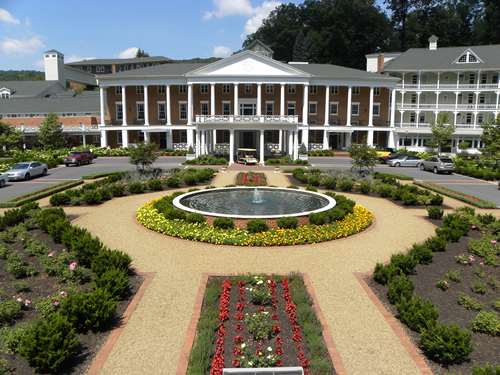
Bulter
-
Harmony Museum
218 Mercer Street, Harmony
C. 1809, addition c. 1816
Donor: Historic Harmony, Inc.; 2009
National Historic Landmark District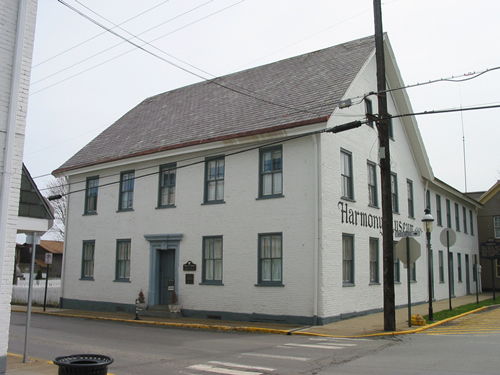
-
Wagner House Museum Annex
222 Mercer Street, Harmony
Prior to 1812
Donor: Historic Harmony, Inc.; 2009
National Historic Landmark District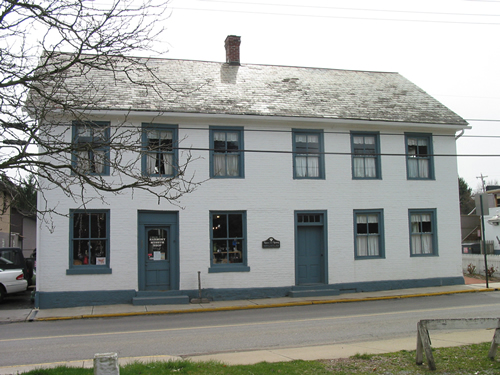
-
Log House
245 Mercer Street, Harmony
C. 1805–1807
Donor: Historic Harmony, Inc.; 2009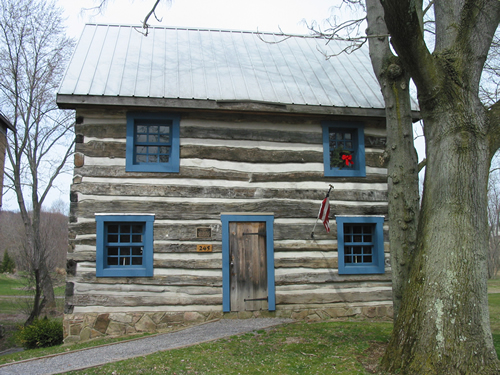
-
Vinegar Hill
1 Evergreen Mill Road, Harmony
Donor: Historic Harmony, Inc.; 2009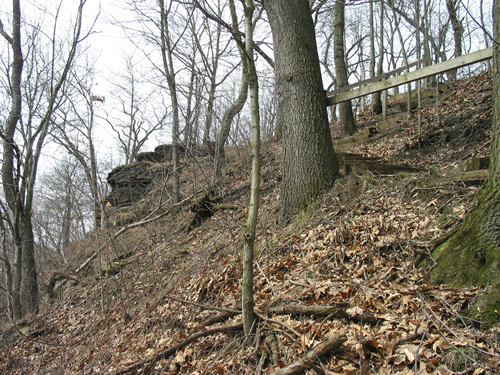
-
Ziegler-Wise Barn
303 Mercer Road
Harmony/Jackson Township
1805
Donor: Historic Harmony, Inc.; 2009
National Register Eligible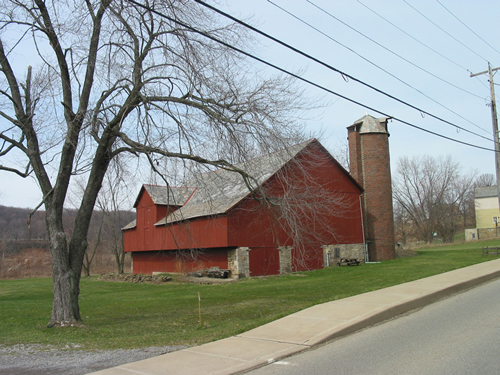
-
Harmony Society Cemetery
831 Edmond Street, Jackson Township
1805–1815
Donor: Historic Harmony, Inc.; 2009
National Historic Landmark District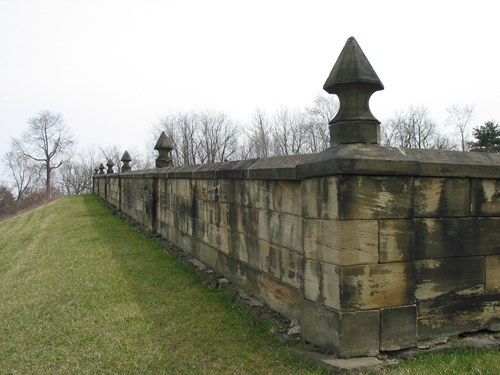
-
Mennonite Meetinghouse & Cemetery
114 Wise Road, Jackson Township
1825; 1815 cemetery
Donor: Historic Harmony, Inc.; 2009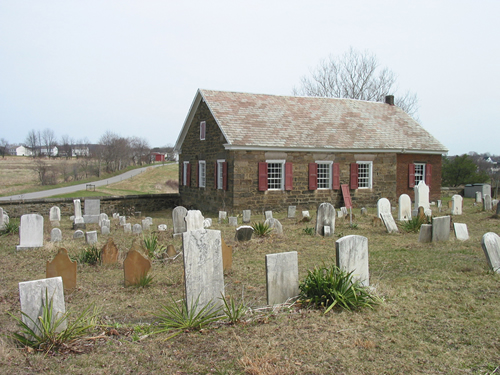
-
Bishop John Boyer House
295 Perry Highway, Jackson Township
1816
Donor: Historic Harmony, Inc.; 2009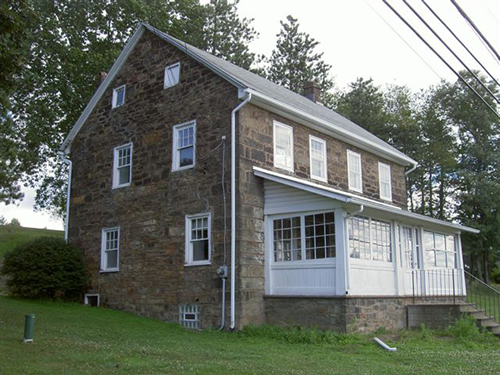
-
Drover's Inn & Barn
State Route 19 & Unionville Road, Cranberry Township
1850; Barn 1898
Donor: Charter Homes, 2020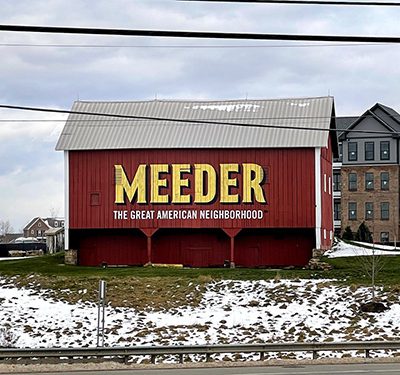
-
Wygal Farm
100+ acres, farmhouse & barn
200 Hutchman Road, Adams Township
Donor: The Estate of John and Jane Wygal, 2021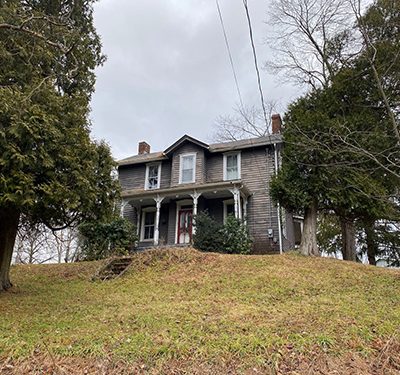
-
Drover’s Inn
State Route 19 & Unionville Rd., Cranberry, PA
built 1850
Donor: Charter Homes, 2020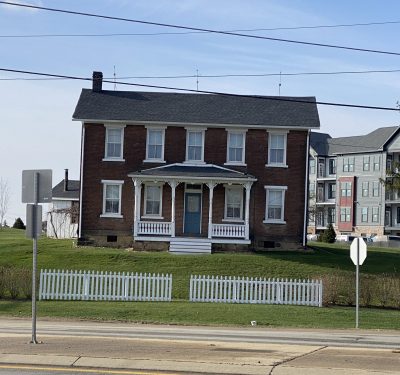
Greene County
-
Horner Farm
Riggs Road, Greene County
Farm dates to 1837; farmhouse c. 1875
Donor: Duncan and Clare Horner; 2006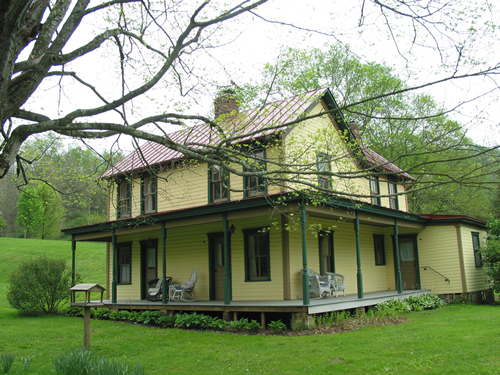
-
Hunnell Farm
2248 Oak Forest Road, Waynesburg
Donor: Charles Evans Hunnell; 2009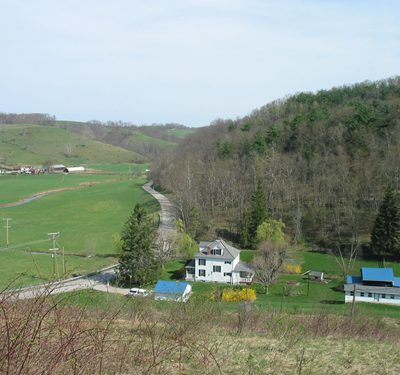
Washington County
-
John Roberts House
225 N. Central Avenue, Canonsburg
1798, 1804, 1809, c. 1840
Donor: Washington County Cultural Trust; 2010
National Register of Historic Places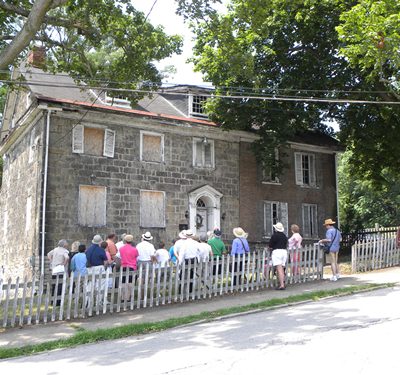
-
Shepherd's Inn Bed & Breakfast
405 E Maiden St, Washington, PA 15301, Washington County. Queen Ann Style. Completed in 1889. Architect unknown.
Donor: Amy Manko: 2019.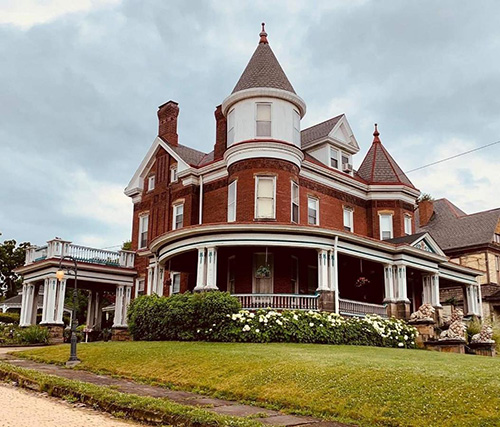
Westmoreland County
-
Roaring Run Farm
550 Sleepy Hollow Road, Donegal
Donor: Jeremiah T. O’Shea and C. William Hausen; 2002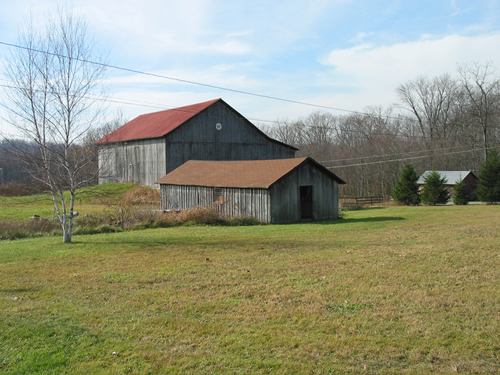
-
John C. Plumer House
131 Water Street, West Newton Borough
1814, addition c. 1846
Donor: Mon Valley Initiative; 2011
National Register of Historic Places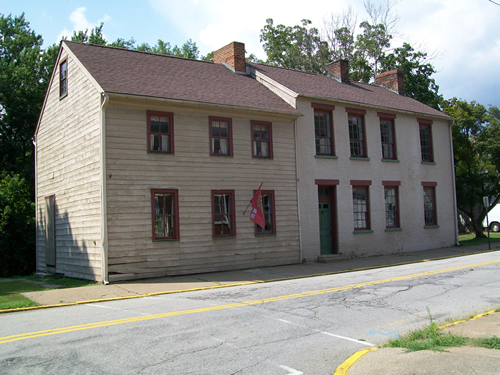
-
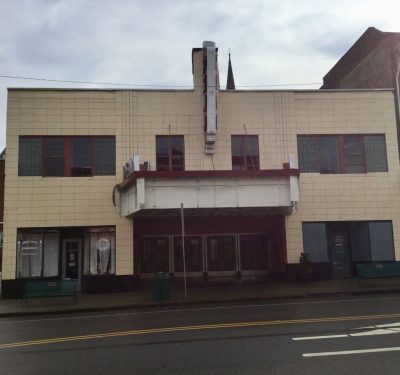
The Penn Theater
147-151 N. Main Street, Butler, PA
Built: 1937
Donor: Bryan Frenchak; 2022
Butler Main Street National Register Historic District